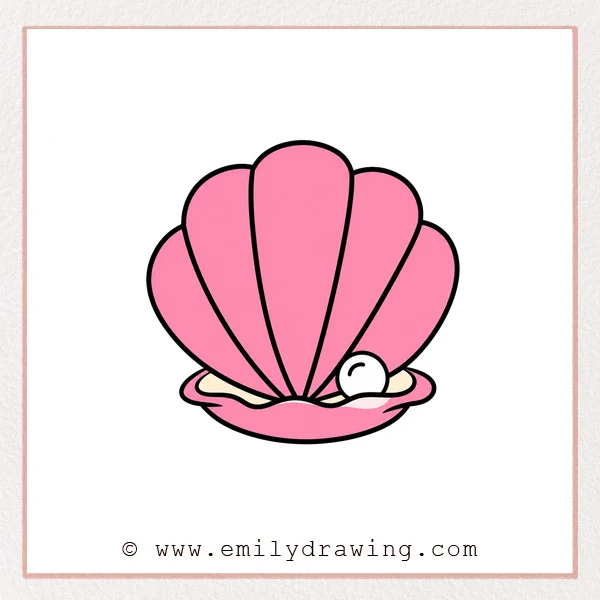
Learning how to draw shell shapes is a calm and beginner-friendly activity. This easy drawing tutorial builds the shell one curved panel at a time. Take your time with each step, and let the fan shape grow gently.
What You Will Need
- Pencil
- Eraser
- Black marker or pen
- Paper
- Colored pencils or crayons
Here are my RECOMMENDED Art Supplies!
- Crayola Coloring Set (140 Pieces – Mega Value!)
- 24 Colored Crayon Set
- A4 Printer Paper
- Crayola Coloring Pencils
- HP Home Printer with Instant Ink!
Time needed:
29 minutes.
Step-by-Step Drawing Guide
Step 1: Draw the Basic Shell Curve
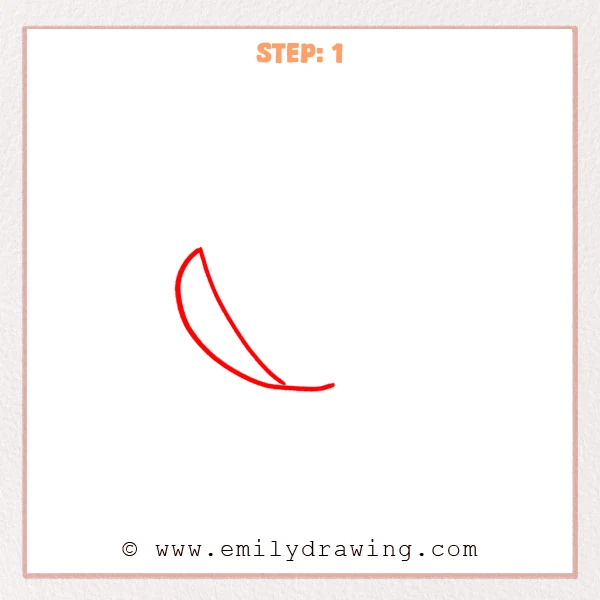
Start near the upper left and draw a long curved outer outline. Add an inner curve from the top down toward the lower right. Finish with a gently rising short curve at the bottom to form the open shell base.
Pro Tip: Keep the top slightly pointed and the bottom wider so the shell feels natural.
Step 2: Add the Right Shell Panel
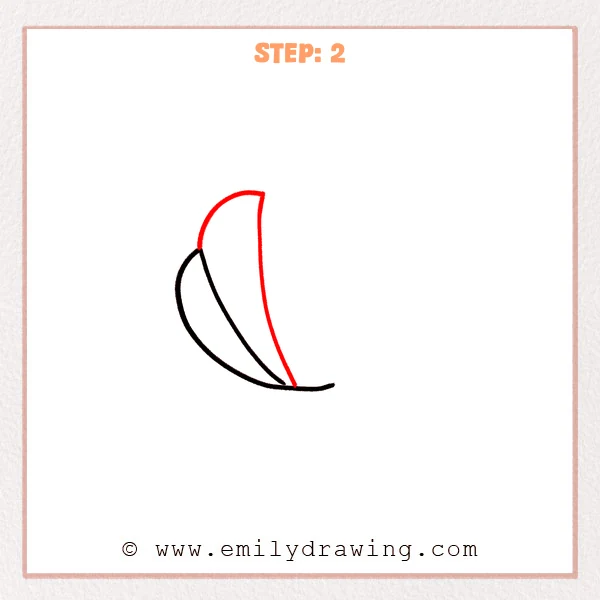
Draw a taller curved panel on the right side, bending from the top downward. Keep this new line near the earlier inner curve, and let both lines narrow toward the base. This gives the shell a layered, opening shape.
Pro Tip: Make the right panel slightly taller to give the shell more dimension.
Step 3: Extend the Large Right Panel
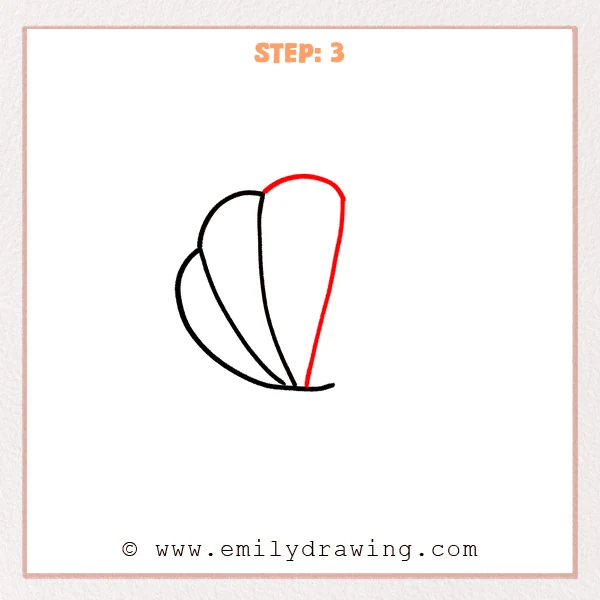
Add a wider and taller curved panel on the right side of the shell. Let the top arch smoothly to the right, then bring the side back down to the base point. This makes the fan-like shell outline feel more complete.
Pro Tip: Let each panel spread from the same lower point so the shell looks balanced.
Step 4: Draw the Far-Right Outer Panel
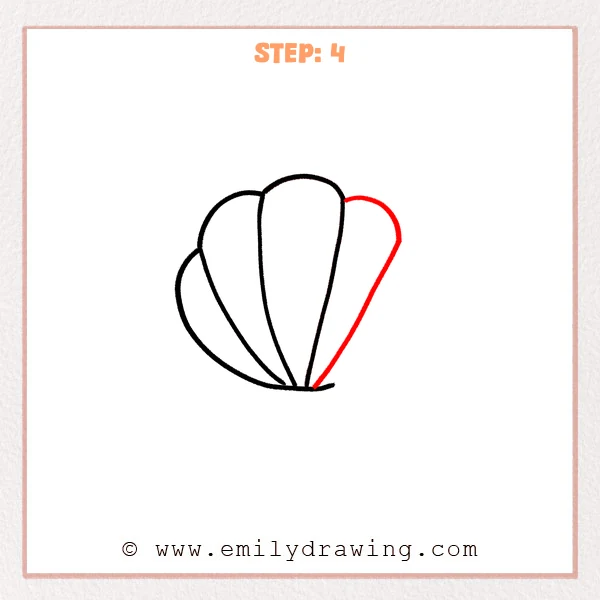
Add a new panel that bulges outward on the far right of the shell. Start from the upper joining point, curve smoothly to the right, then return to the base point. This widens the fan shape and brings the shell closer to its full outline.
Pro Tip: Avoid making the outer panel too sharp, because rounded turns look more shell-like.
Step 5: Add the Right Outer Edge Curve
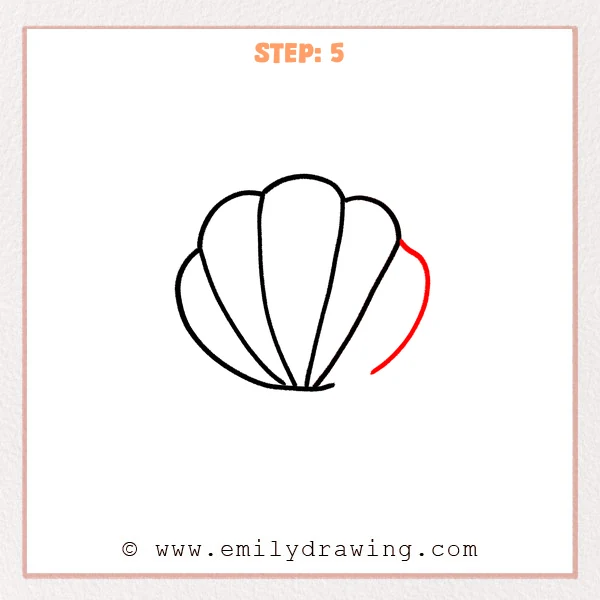
Continue with a long outward curve on the far right side. Start from the upper right joining point, then curve smoothly downward to shape the outer edge. This makes the shell’s right outline look fuller.
Pro Tip: Keep this outer curve wider than the inner panel to show the shell’s full width.
Step 6: Add the Bottom Decorative Edge and Small Swirl
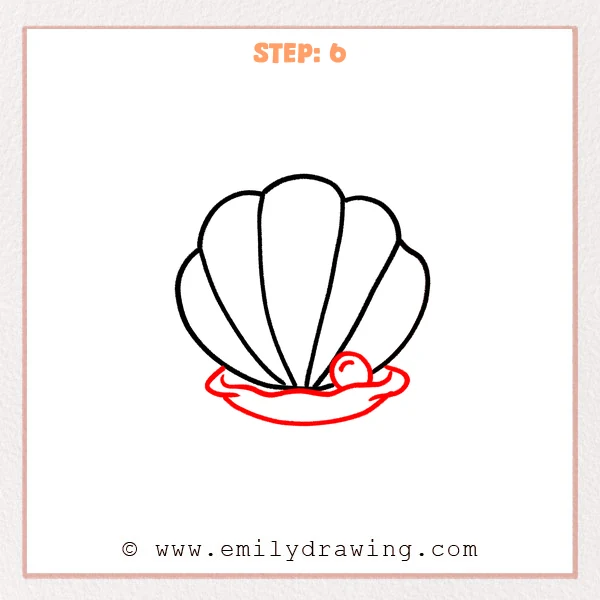
Draw a wide wavy edge along the bottom of the shell. Let the edge stretch from left to right, supporting all the shell panels. Add a small curled swirl on the lower right for a decorative shell detail.
Pro Tip: Keep the bottom edge spreading evenly so the shell does not look tilted.
Step 7: Color in your drawing!
Fun Facts
- Shells often have fan-like ridges that help make their shape strong.
- Many seashells are made by sea animals as protective homes.
- Shell patterns can be smooth, striped, spotted, or naturally ribbed.
Pin it now, Draw later!
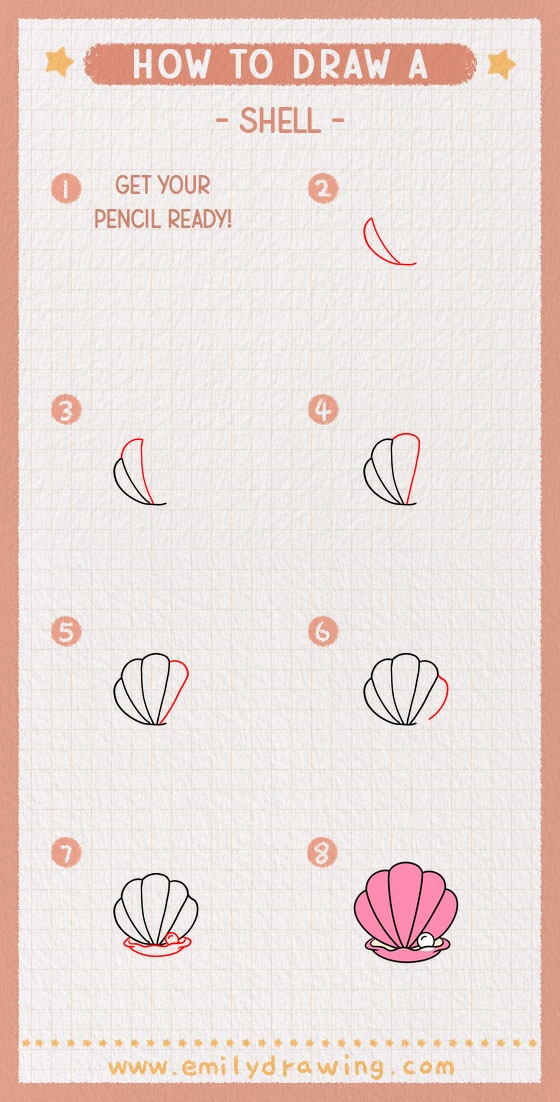
Now you have completed a simple shell step by step drawing. Trace the final lines with a marker, then erase any extra pencil marks. Add soft colors like peach, pink, cream, or light brown to finish your shell drawing for beginners.
Try drawing another shell beside it to make a peaceful beach scene.
Get the FREE Printable Drawing Guide
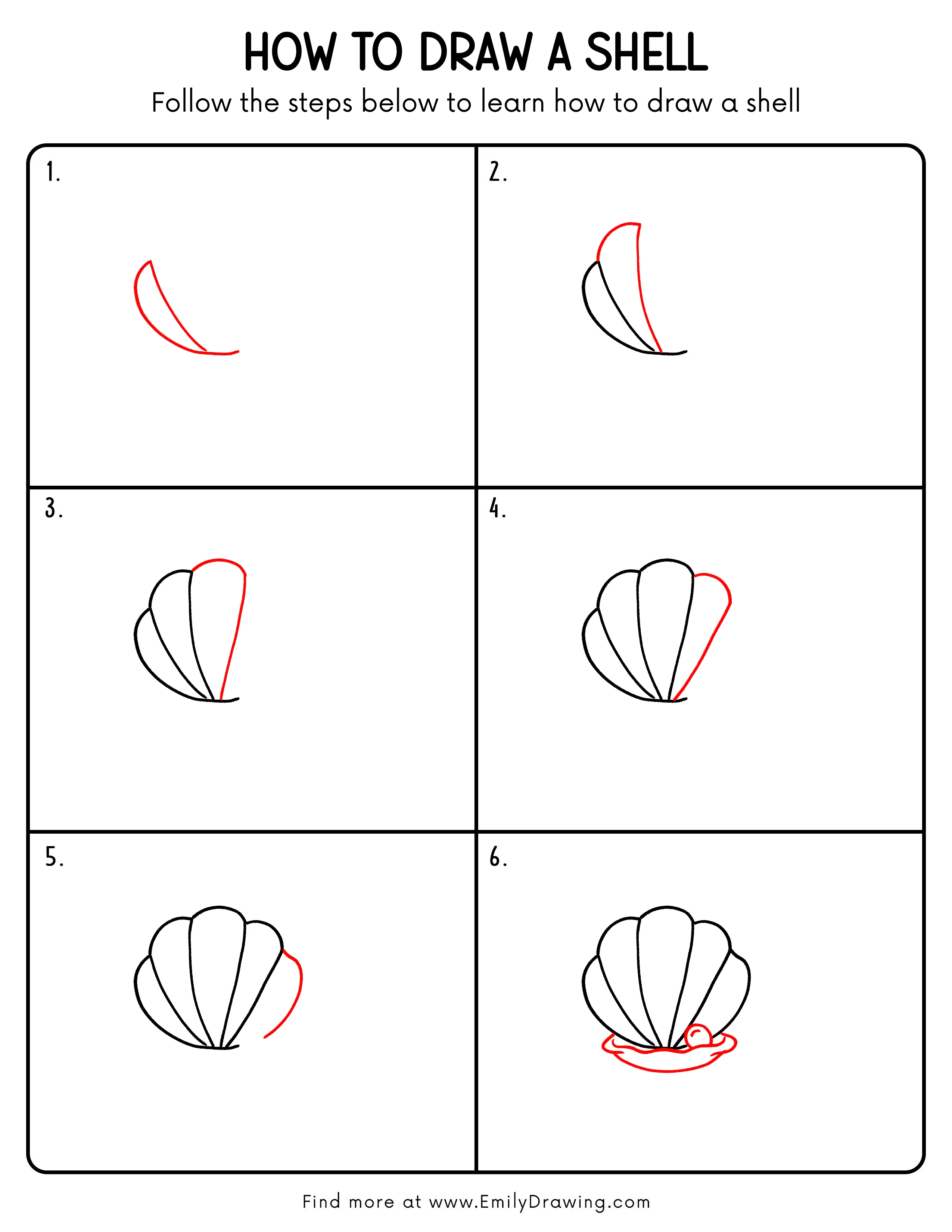
FREE Download Printable Shell Drawing Tutorial
Frequently Asked Questions
Is this shell drawing good for beginners?
Yes, this tutorial uses simple curved lines and repeated panel shapes. It is a good drawing for beginners who want to practice smooth outlines.
How can I make my shell look more realistic?
Keep the panels spreading from the same base point. You can also add light shading near the bottom and between the shell panels.
What colors work well for a shell?
Soft natural colors work nicely, such as cream, peach, pale pink, and sandy brown. You can also add brighter colors for a playful magazine-style shell.