Drawing fall leaves is a calm and simple way to practice shape, line, and balance. In this easy drawing tutorial, you will learn how to draw a fall leaf step by step with gentle curves and clear points. This guide is made for beginners and works well for children, parents, and teachers drawing together.
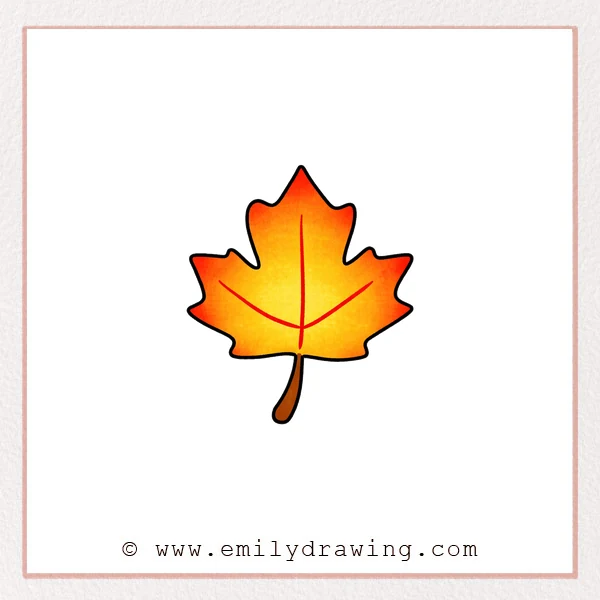
What You Will Need
- Plain paper
- Pencil
- Eraser
- Black pen or marker
- Colored pencils or crayons in fall colors
Here are my RECOMMENDED Art Supplies!
- Crayola Coloring Set (140 Pieces – Mega Value!)
- 24 Colored Crayon Set
- A4 Printer Paper
- Crayola Coloring Pencils
- HP Home Printer with Instant Ink!
Time needed:
28 minutes.
Step-by-Step Drawing Guide
Step 1: Sketch the Top Outline of the Leaf
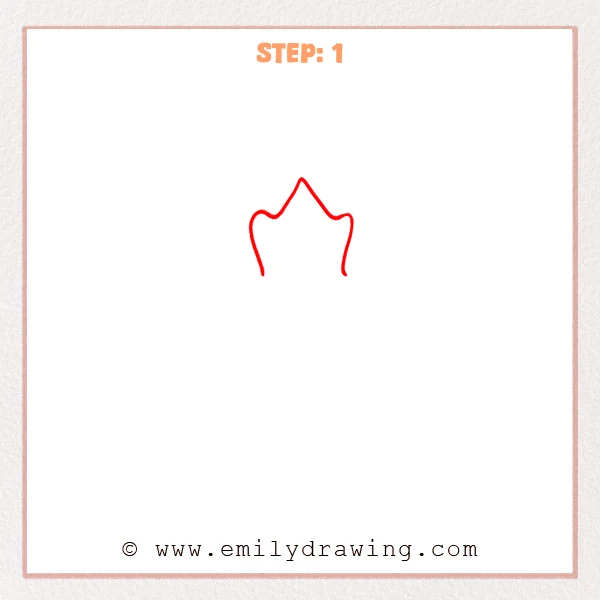
Start near the upper middle of the page and make a soft pointed tip, like a small peak. Then let the line curve outward on both sides with two rounded bumps, so the top half begins to look like a fall leaf. Keep the lower part open for now.
Pro Tip: Keep both sides close in size so the leaf feels balanced and natural.
Step 2: Add the Large Right-Side Lobe
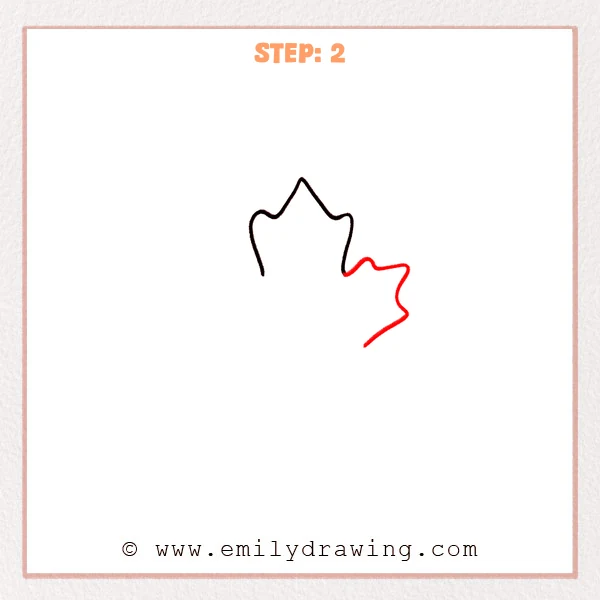
Continue from the open space on the right and let the line move outward with a small gentle wave first. Then add a clearer point and bring the line down softly, so the right half of the fall leaf looks fuller and wider. Leave the bottom open.
Pro Tip: Let the right lobe be slightly larger so the leaf feels open and natural.
Step 3: Add the Large Left-Side Lobe
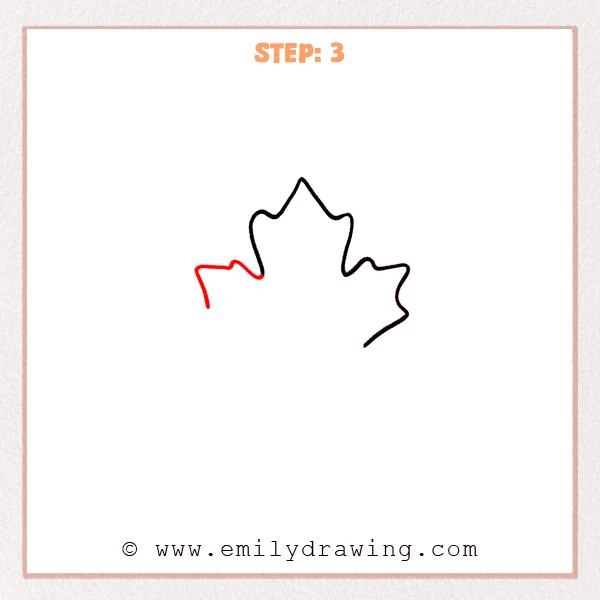
Now continue into the open space on the left with a new outer edge. Start with a small rounded wave, then open it into a wider point, and let the line fall gently downward so the left half matches the full fall leaf shape. The center bottom should still stay open.
Pro Tip: Keep the left lobe close to the right lobe in height so the leaf stays balanced.
Step 4: Connect the Bottom Outline of the Leaf
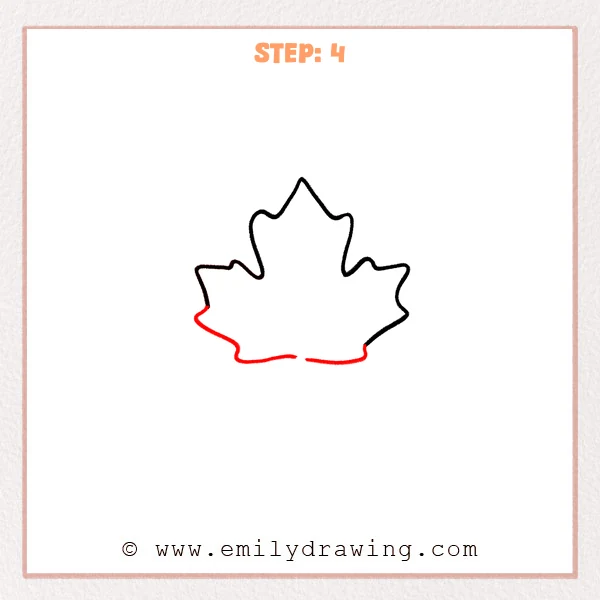
Continue from the lower left and guide the line toward the middle with two soft curves, so the bottom edge feels gentle and natural. Then connect the lower right side in the same way, leaving a small opening in the center for now, and the full fall leaf shape will be easy to see.
Pro Tip: Keep the bottom curves shallow so the leaf outline stays smooth and balanced.
Step 5: Add the Leaf Stem
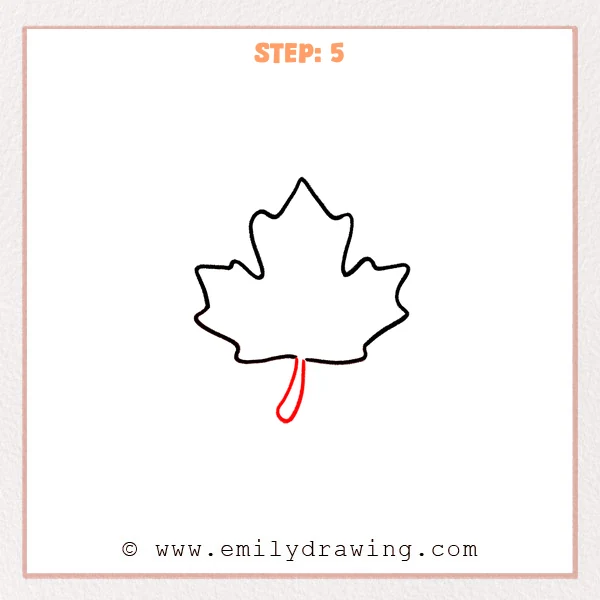
From the small opening at the bottom center, start two close curved lines and guide them downward. Let them meet with a rounded end, so the stem looks slim and soft beneath the fall leaf. This small detail helps the leaf feel complete.
Pro Tip: Keep the stem narrow so it matches the light feel of the leaf.
Step 6: Add the Center Vein and Side Veins
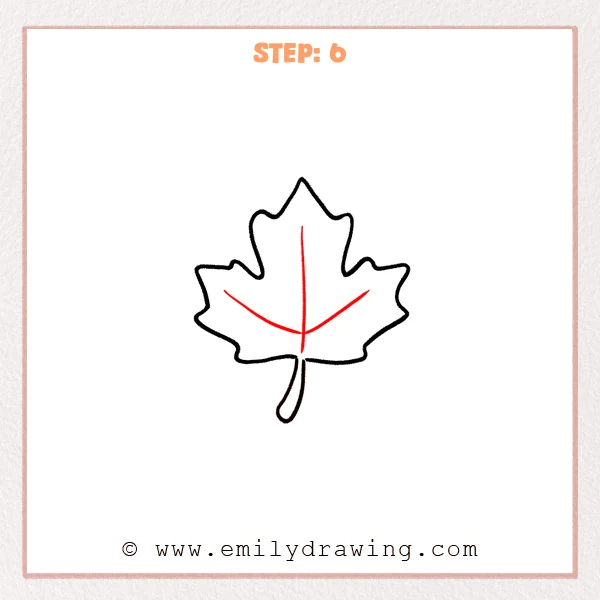
Start just above the stem and draw a fairly straight center vein up toward the top point of the leaf. Then add one slanted vein to each side from the middle, so the inside of the fall leaf begins to look more clear and structured. These lines give the leaf a finished look.
Pro Tip: Make the veins lighter than the outer edge so the leaf keeps a soft, natural look.
Step 7: Color in your drawing!
Fun Facts
Fall leaves change color when the green chlorophyll fades away.
Maple leaves often show bright red, orange, or yellow colors in autumn.
Leaf shapes can help us tell one kind of tree from another.
Pin it now, Draw later!
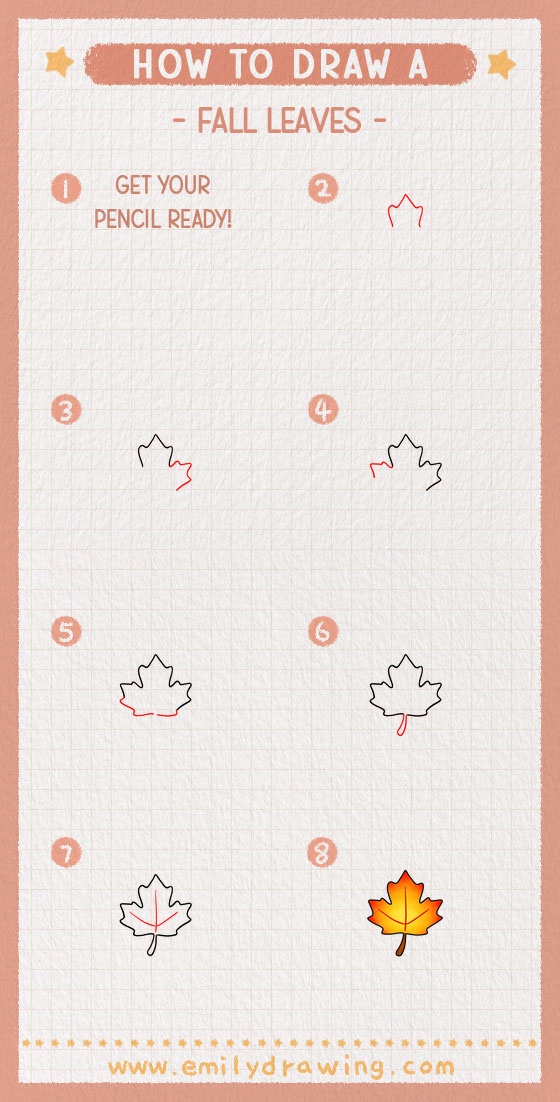
You have now finished a simple fall leaf with a clear outline, a neat stem, and gentle veins. Try coloring it with orange, red, yellow, or brown to give it a warm autumn look. You can also add light shading along one side of each lobe to make the leaf feel more rounded.
One common beginner mistake is making the lobes very uneven, which can make the leaf look tilted. Take your time and compare the left and right sides as you draw. Keep practicing this step by step drawing, and try making a few more leaves in different sizes for a full autumn page.
Get the FREE Printable Drawing Guide
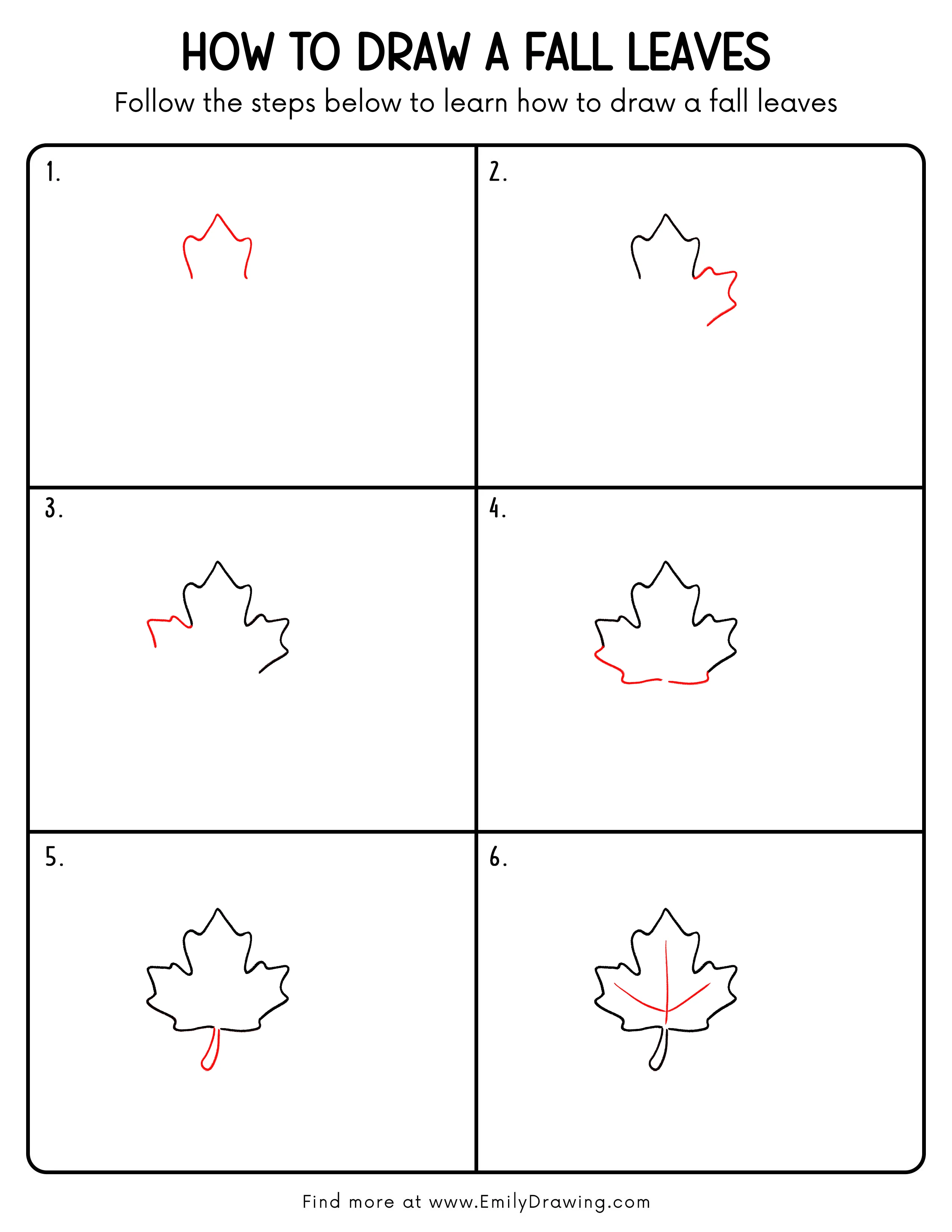
FREE Download Printable Fall Leaves Drawing Tutorial
Frequently Asked Questions
Is this an easy drawing tutorial for beginners?
Yes. The shapes are simple, and each step builds slowly from the last one.
What colors should I use for fall leaves?
Orange, red, yellow, brown, and even dark green all work well for autumn leaves.
How can I make my leaf look more realistic?
Add gentle shading, keep the veins light, and make the outer points a little varied instead of perfectly sharp.